
Why Hair Products Fail: Stimulation vs. Regeneration
The hair loss industry is built on two approaches. Neither one rebuilds the follicle. Here's what that means for you.
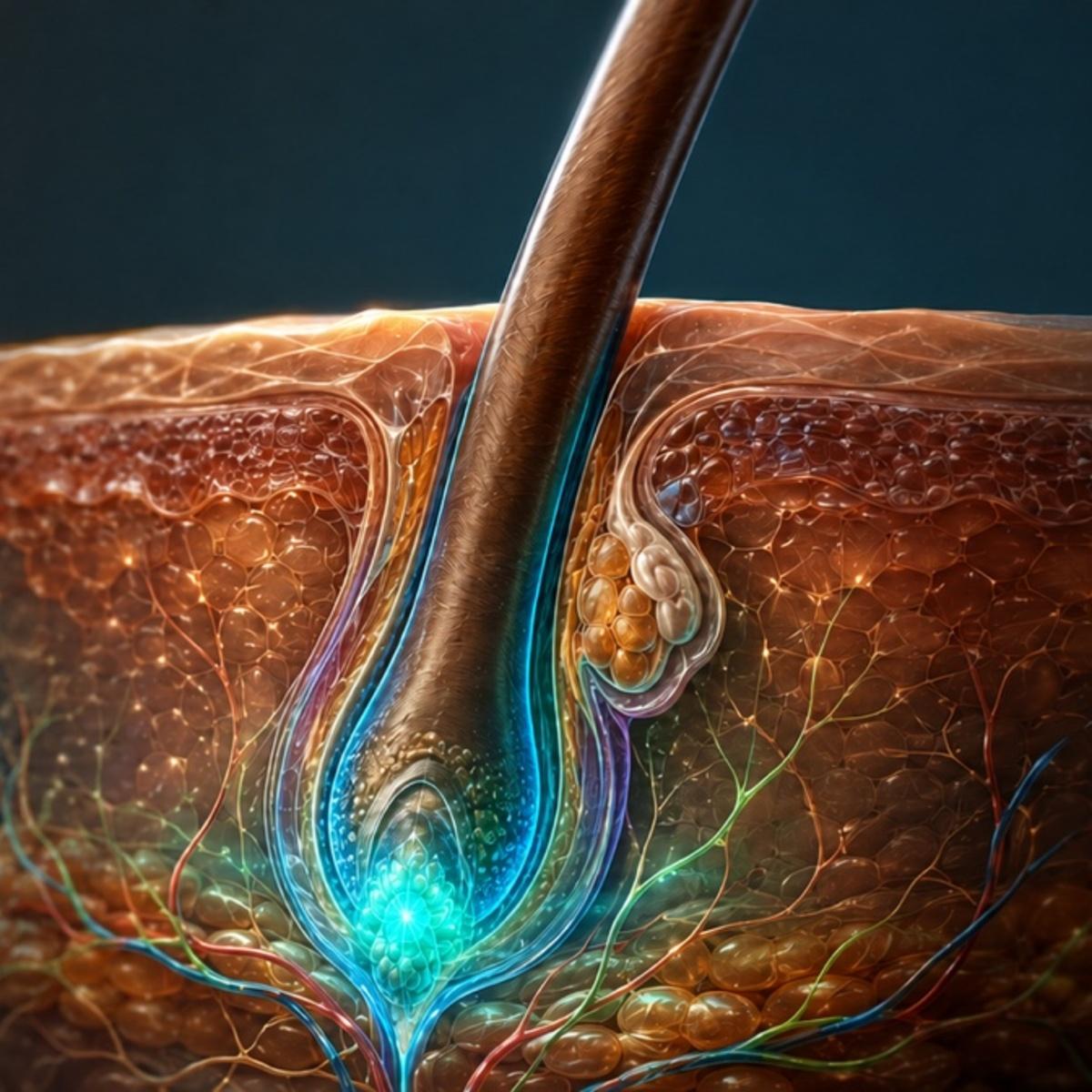
If your hair is thinning, you've been offered the same two choices as everyone else.
Choice one: the drugs.
Minoxidil. Finasteride. They're considered the serious options, and they do produce results for many people. But read the fine print and you'll find the catch. These drugs work by chemically stimulating your follicles into producing hair. They don't repair anything. Which means the day you stop using them, the results start disappearing. You're not fixing your hair. You're renting it, month to month, with side effects as part of the lease.
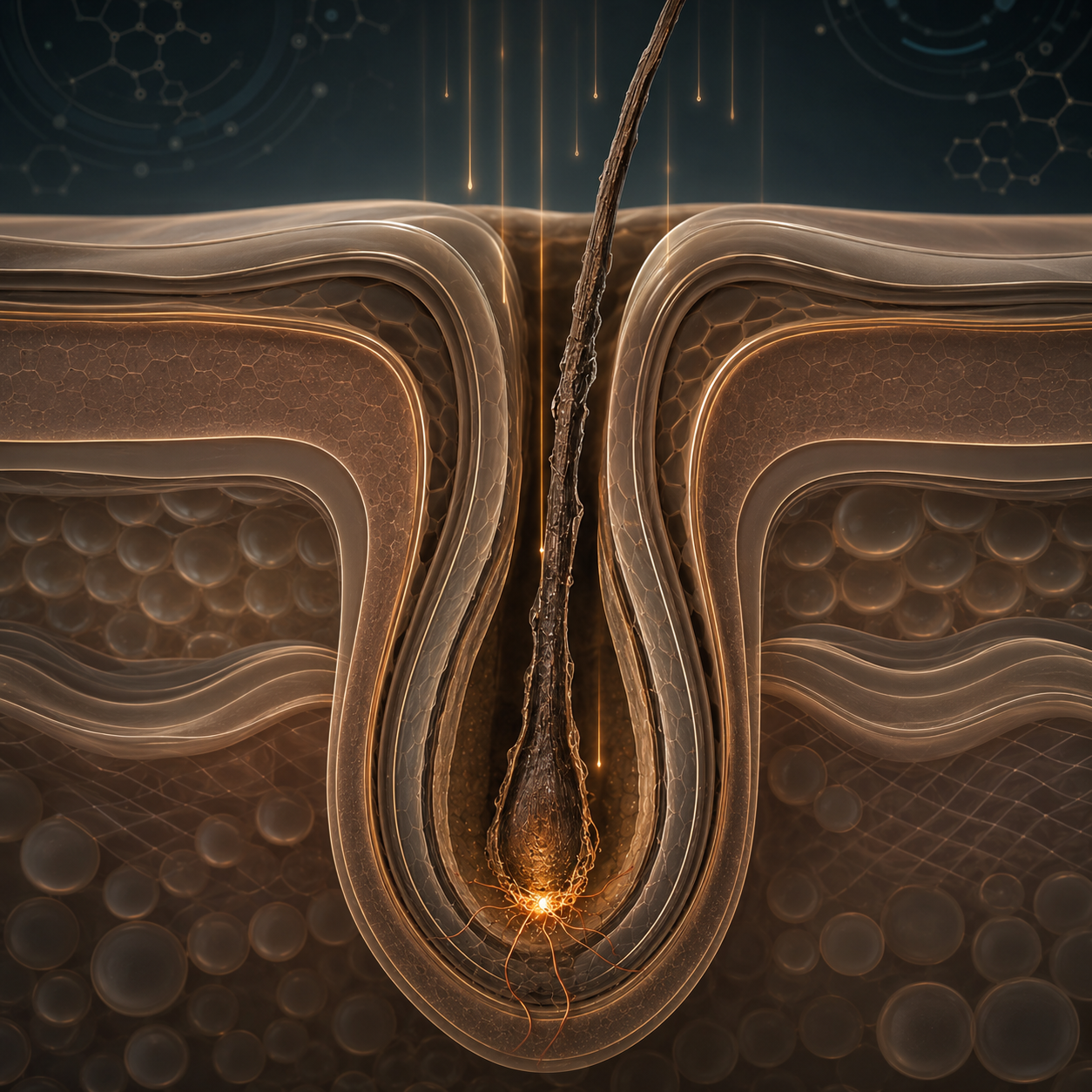

Choice two: the vitamins.
Biotin. Collagen gummies. Supplement blends. These are genuinely good for you. Better nutrition supports better overall health, and healthier bodies do grow healthier hair. But for most people with visible thinning, vitamins alone don't reverse it. That's because most hair loss isn't caused by a vitamin deficiency in the first place. Taking more of a nutrient you already have won't rebuild a follicle that's breaking down.
So the real choice you've been given is this: results with risk and dependency, or good general health that leaves your hair where it is.
Millions of people look at those two options and quietly pick a third: nothing.
They disappear into hats, styling tricks, and the back row of the family photo, believing this is just what happens.
It isn't. The problem was never that your follicles can't grow hair. The problem is that nothing you've been offered was rebuilding them.
What's actually happening in a thinning follicle
Your hair follicle is a living organ. A small one, but a complete one, with its own blood supply, its own stem cell reserves, and its own growth cycle.
Every hair on your head is produced by one.
When hair thins, the follicle itself is usually shrinking. Each growth cycle, it produces a slightly finer, slightly shorter hair.
The follicle isn't dead. It's deteriorating. It's a machine still running, but running down.
Now look at your two options again through that lens:
Drugs stimulate the machine.
They push a deteriorating follicle to produce more than it otherwise would. But they don't repair the deterioration. That's why the results only last as long as the chemical pressure does. You're revving a failing engine. The moment you let off the pedal, you're back where the engine actually is.
Vitamins fuel the machine.
They supply raw materials, and a well-fueled machine runs better than a starved one. That's real, and it matters. But fuel doesn't repair a machine that's breaking down. A follicle in decline with perfect nutrition is still a follicle in decline.
Nobody was rebuilding the machine. That's the gap the entire industry left open.
Follicle regeneration: the third approach
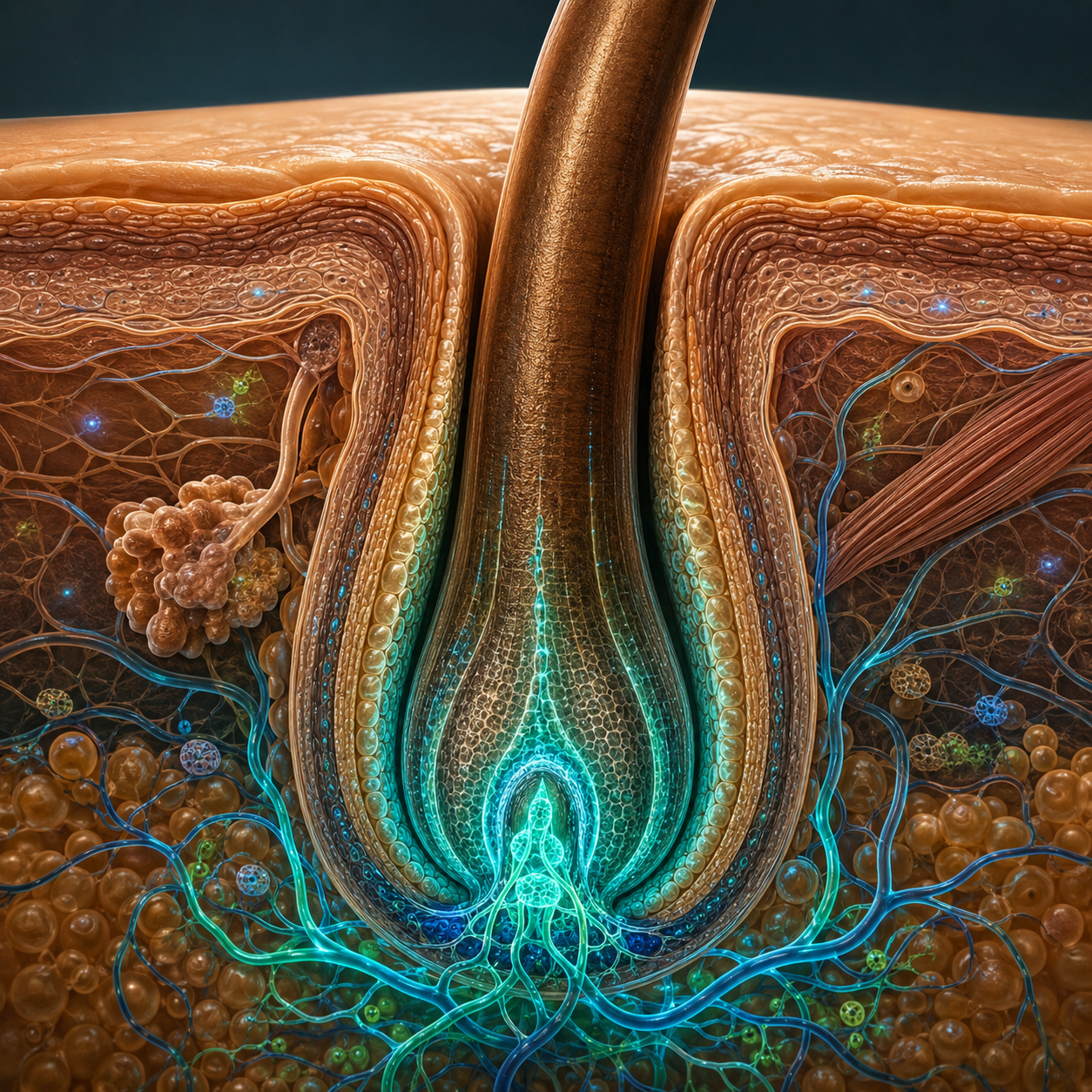
Follicle regeneration is a different idea: instead of stimulating a deteriorating follicle or feeding it, repair and rejuvenate the follicle itself, naturally, so it produces its own thicker, fuller hair again. The way your body was designed to.
Not a drug forcing output. Not a vitamin hoping for the best. A topical formulation designed to support the follicle's own repair and renewal, at the organ level, where the problem actually lives.
Here's the comparison in plain terms:
| Stimulation (drugs) | Feeding (vitamins) | Regeneration | |
|---|---|---|---|
| What it targets | The follicle's output | The follicle's nutrition | The follicle itself |
| How long it works | Only while you keep paying | Ongoing support, but the follicle doesn't change | The follicle resumes its own job |
| Health trade-off | Side effects accepted as the price | Good for overall health, but not hair growth | All-natural, no trade-off |
| What you own | Nothing. Stop paying, lose the hair | A supplement habit | Your own rebuilt hair |
Stimulation (drugs)
Feeding (vitamins)
Regeneration
Who this matters for:
If you're seeing the first signs of thinning, this is the moment your follicles are strongest and repair is most within reach. Early intervention is where regeneration has the most to work with.
If you read the side effects list and walked away from the drugs, you didn't give up on your hair. You refused a bad trade. Until now, refusing the drugs meant accepting nothing. It doesn't anymore.
If you're on the drugs and hate the dependency, you already know how this works: you're renting. Regeneration is the exit ramp people in your position have been asking for.
If you've tried the natural products and nothing changed, there's a reason, and it's not you. Those products were feeding a follicle that needed rebuilding. Good nutrition was never going to be enough on its own. The approach was incomplete, not your commitment to it.
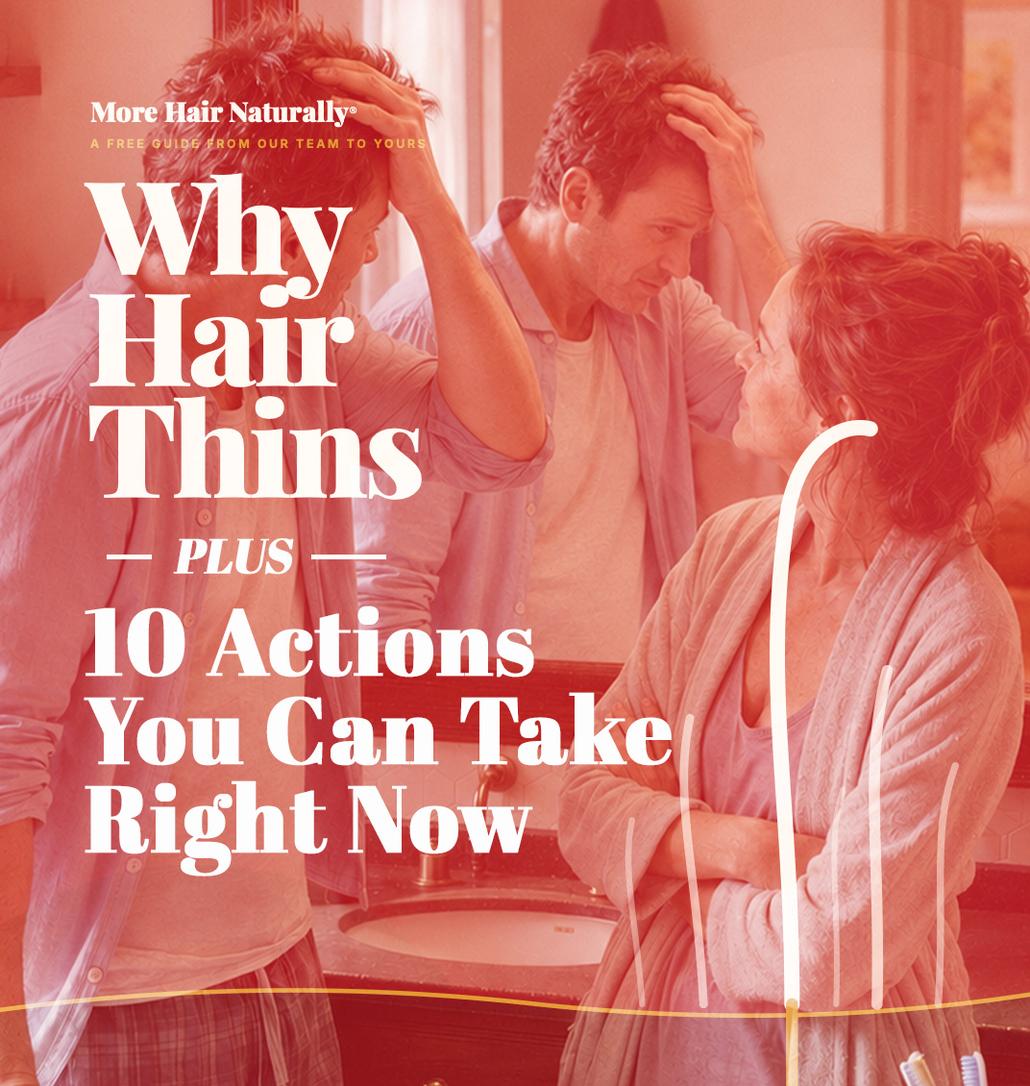
Knowing the mechanism is step one. Here's step two.
There are things you can start doing this week that support follicle health, regardless of what you decide about any product. We put ten of them in a short guide. No cost, no catch, just hit "Submit" and we will email it right over to you.
One guide, then occasional emails about hair. Unsubscribe anytime.
Where this approach comes from
More Hair Naturally has spent over 30 years in natural haircare, and in 2016 we brought the first all-natural topical stem cell formulation for hair growth to market. We didn't join the stimulation industry. We built the alternative to it.
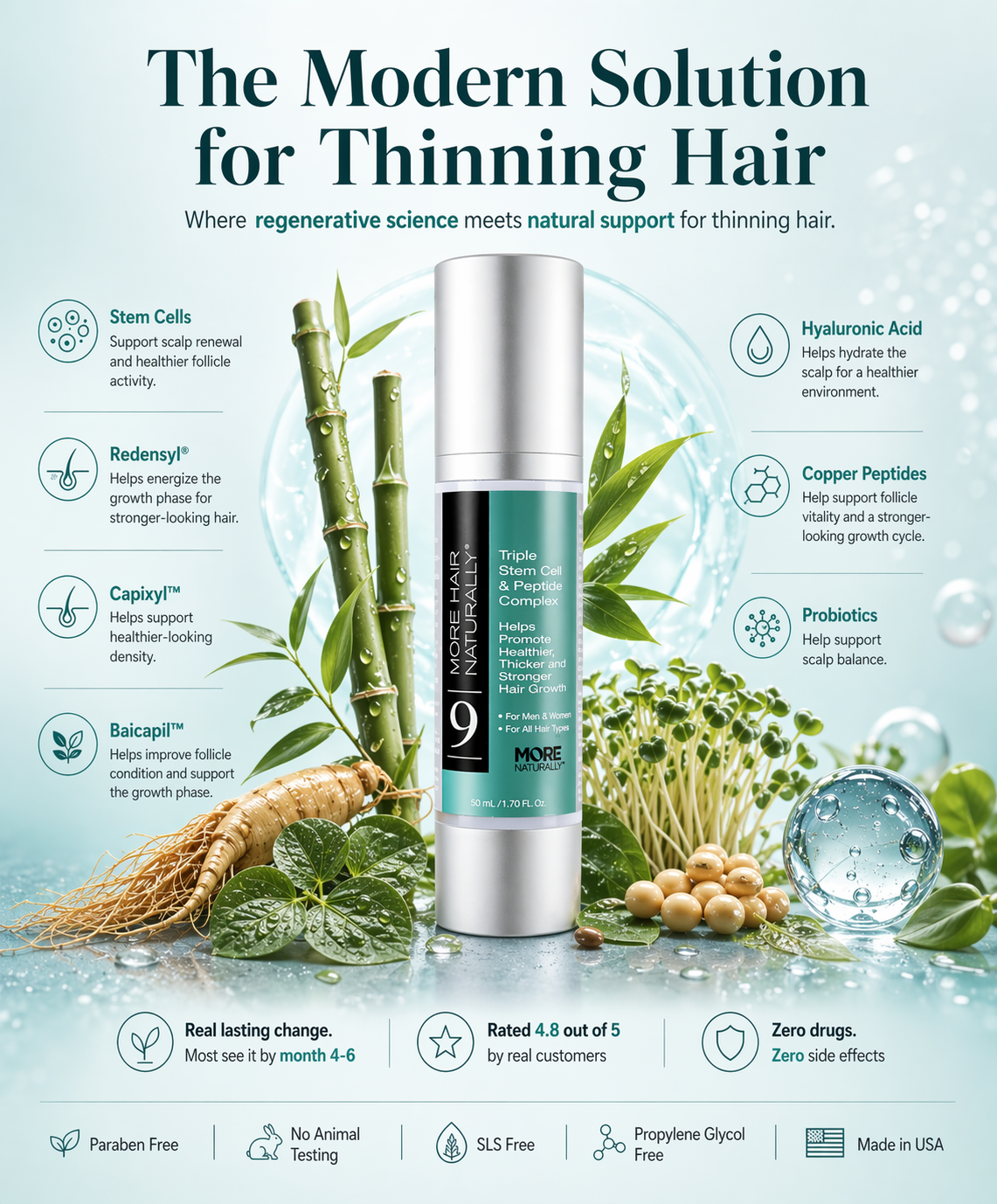
More Hair Naturally 9 is that alternative: a triple stem cell, drug-free topical designed to repair and rejuvenate the follicle so it produces its own thicker, fuller hair again. No prescription. No side effects traded for results. No renting your hair.
Right now, More Hair Naturally 9 is $95 instead of the regular $125.
You don't have to choose between your health and how you feel about the person in the mirror. That choice was always false. Now there's a third option, and it's the one that should have existed all along.
Disclaimer:
This article is for educational and informational purposes only. It is not medical advice, and it is not intended to diagnose, treat, cure, or prevent any disease or medical condition. The statements on this page have not been evaluated by the Food and Drug Administration.
More Hair Naturally products are cosmetic topical formulations intended to support the appearance and condition of hair and scalp. Individual results vary.
Hair thinning and hair loss can sometimes be a symptom of an underlying medical condition, including thyroid disorders, hormonal imbalances, autoimmune conditions, and nutritional deficiencies. If you are experiencing sudden, patchy, or rapid hair loss, or hair loss accompanied by other symptoms, consult a licensed physician or dermatologist. Always speak with a qualified healthcare provider before starting any new product or regimen, particularly if you are pregnant, nursing, taking medication, or managing a health condition.

For all general inquiries, please contact us at info@morehairnaturally.com or
call 1(818)303-9038
© Copyright 2026 More Naturally Inc. All rights reserved.